
May 04 2026

This is the third part in our series of articles looking at some of the issues associated with fingerprint evidence. Over the last two weeks we’ve focussed on ‘identification’; that is, the question of ‘who’ a fingerprint might have come from - if you need a refresher you can revisit here [Part 1; Part 2]. This week we’re going to take a look at the leap from ‘who’ to ‘how’, and illustrate how assumptions can massively skew the significance of fingerprint evidence.
Activity assessment – ‘I did touch it, but not like that’
‘Your prints are at the crime scene, so how do you explain that if you didn’t do it?’ Whilst this statement is clearly satirised, it does beg a question: How would you explain the presence of your fingerprints at the scene of a crime, and what if it was at a location you’d never even been to?
It is common for fingerprint evidence to be reported in SFR1 format and, as such, be limited to a simple statement that a fingerprint has been ‘identified’ to a given person. Whilst this is effective for communicating core findings, it compels the reader to draw inference about the significance of the findings in the wider case context. This can be a dangerous thing to do, as key aspects of the findings, such as the precise location and orientation of the mark, have not been revealed.
This is nicely illustrated by a previous case we worked on involving an attempted robbery during which the offender tried to force a metal security gate and a local male was linked to the offence by virtue of fingerprints on the gate. The findings were reported in SFR1 format, and the onus shifted to the defendant to explain why their fingerprints were present – something which, at first glance, looked to be challenging as the defendant claimed never to have been to the scene.
When we assessed the evidence, however, we determined that with the gate in situ it would have been impossible for the defendant to have deposited the marks; a hand simply could not be positioned and orientated on the relevant part of the gate when it was fixed to the wall. It would, however, fit with expectations if the gate were being carried on its side prior to it being fixed in place. It turned out that the defendant had previously worked for the company that fabricated the metal security gate, during which he would move gates around the workshop and load them for transport. The seemingly compelling ‘identification’ detailed in the SFR, consequently amounted to nothing more than bad luck. Ultimately this case had a happy ending, but what would the outcome have been if we hadn’t examined the evidence?
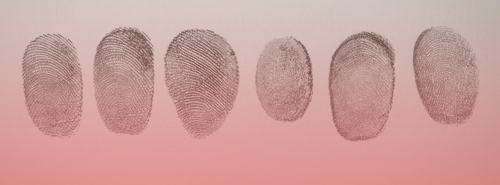
Fingerprint evidence is more than just comparison of two marks, so when this is the only question that’s been addressed in an SFR it’s essential to seek expert input before extrapolating findings to address higher order questions.
Next week we’ll be concluding our series by looking at another issue that affects the significance of fingerprint evidence; the age of the mark. No spoilers, but this will include further examples of cases where assumptions led to erroneous conclusions. You don’t, of course, have to wait to contact us if you have a case involving disputed fingerprint evidence; just give us a call or drop us a line at your convenience and we’d be happy to help.
Keith Borer Consultants is a leading provider of forensic science expert witness consultancy and has been providing services to the Criminal Justice System for more than four decades. If you have a case involving disputed fingerprint evidence, or any of the broad range of specialisms our numerous experts cover (see our website), please do not hesitate to email kbc@keithborer.co.uk or call us on 0191 332 4999.