
April 28 2026
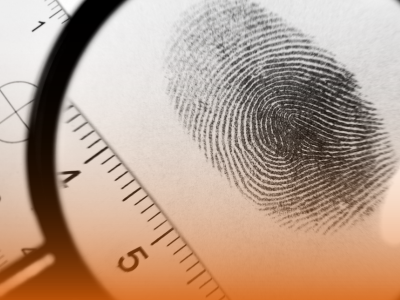
This is the second part in our series of articles looking at some of the issues associated with fingerprint evidence. Last week we shone a spotlight on the fingerprint reference form, and the inescapable risk if this has been incorrectly attributed – if you missed it or need a refresher you can catch up here. This week we continue with the theme of ‘identification’ and introduce the sensitive subjects of bias and error.
Identification – ‘The devil is in the detail’
You’ll undoubtedly have seen fingerprints referred to as ‘identified’ or heard Fingerprint Examiners say they are ‘100% certain’ or ‘in no doubt whatsoever’ that fingerprints match. Backing this up is usually a statement about the number of ridge characteristics that have been found to match and a comment that there are ‘no differences’. On the face of it such statements can appear compelling, but certainty in science is a rare thing, and fingerprint assessments are not beyond reproach.
When examining a questioned fingerprint (that’s a mark recovered from a scene or on an item of interest), Fingerprint Examiners compare ridge detail features (characteristics) to reference prints. The more matching features there are, the more convincing the ‘identification’ looks. The difficulty here is that questioned fingerprints are often poor quality and, as a result, it can be challenging to determine what is and isn’t there. This is where the human brain can conspire against us, and unintended biases and errors creep in.
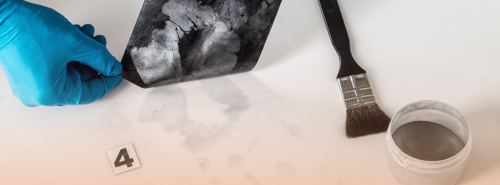
As there is no defined minimum standard for a fingerprint to be classified as ‘identified’, it is left to the individual Fingerprint Examiner to form a view on whether a match is good enough to attract this label. The danger with this is that when something is close but not necessarily close enough, it’s human nature to look for things that will tip the balance; upgrading dubious features to afford them more value than they should have, or explaining away differences, such as a single mismatches when there are a number of other matching features, because they undermine the narrative. We’ve seen both of these situations in casework.
Whilst you might think that errors would be rare in the regulated and quality controlled world we exist in, ultimately fingerprint ‘identification’ is a matter of opinion, not fact, and opinions can be wrong, particularly if best practice isn’t followed. The only way to mitigate against bias and the errors this can cause is through rigorous process; documenting all features of a questioned mark before looking at reference prints, and holding firm when the features of a questioned mark lack clarity or don’t completely match a reference print. This is the process we follow; others don’t necessarily adopt the same approach.
Next week we’ll move on from identification and start to take a look at wider issues that can affected the significance of fingerprint evidence. In the meantime, if you have a case where fingerprint evidence is disputed by your client, be sure to drop us a line.
Keith Borer Consultants is a leading provider of forensic science expert witness consultancy and has been providing services to the Criminal Justice System for more than four decades. If you have a case involving disputed fingerprint evidence, or any of the broad range of specialisms our numerous experts cover (see our website), please do not hesitate to email kbc@keithborer.co.uk or call us on 0191 332 4999.